A heavy, intricately cut crystal decanter rests on a mahogany table, catching the morning light just so. It belonged to a great-grandfather, yet its clarity remains flawless-unchanged by time. This isn’t merely glassware; it’s a vessel of memory, of lineage. While ordinary glass serves a purpose, crystal transcends function. It carries with it centuries of artisanal mastery and a mineral composition so refined that its value isn’t just monetary-it’s cultural, almost sacred.
The Noble Composition and Exceptional Density of High-End Crystal
What sets crystal apart begins beneath the surface-literally. Unlike standard soda-lime glass, true crystal contains a significant proportion of lead oxide, often exceeding24%. This addition is not merely chemical; it’s transformative. Lead oxide dramatically increases the refractive index, allowing light to bend and scatter within the material. This creates the signature “fire”-a prism-like effect where white light fractures into subtle rainbows along the edges of a cut surface. The brilliance isn’t accidental; it’s engineered through chemistry.
The Role of Lead Oxide in Visual Brilliance
This optical magic is why a single beam of sunlight passing through a crystal chandelier can turn a room into a kaleidoscope. The higher refractive index doesn’t just enhance sparkle-it deepens perceived clarity. Objects seen through crystal appear sharper, more defined. This heritage of excellence is preserved by masters of the craft, as demonstrated by the creations of Maison Saint Louis. Their pieces don’t just reflect light; they orchestrate it.
Structural Strength and the Ability to Be Carved
Paradoxically, the addition of lead oxide also increases the material’s malleability during crafting, despite making the final product denser and heavier. This unique balance allows artisans to execute deep, intricate cuts without shattering the piece. Each facet is a risk-a slip in pressure can fracture the entire form. But when done correctly, the result resonates both visually and acoustically. Tap the rim of a fine crystal glass, and it sings-a sustained, clear ring that ordinary glass cannot replicate. That sound? It’s the audible signature of density and precision.
The Human Cost of Mastery: Why Artisanal Crafting Commands a Premium
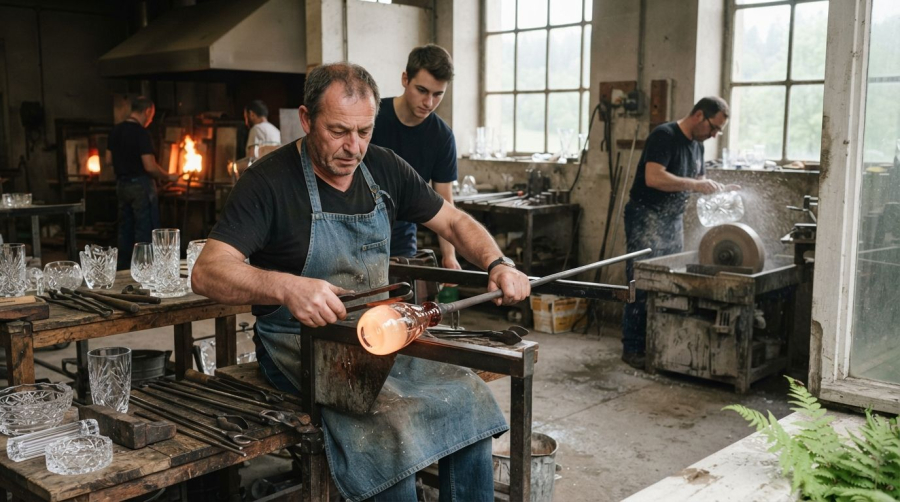
No machine can replicate the judgment of a hand that has spent decades shaping molten material. The price of crystal isn’t just for materials-it’s for time, for training, for the silent concentration of a craftsperson working at the edge of control. Every piece begins as a gather of molten crystal, pulled from a furnace at over 1,000°C. From there, human instinct takes over.
Mouth-Blowing: A Vanishing Technical Skill
At the heart of the process is mouth-blowing-a technique unchanged for centuries. The artisan inflates the molten mass using only breath, manipulating it with tools and motion. Achieving uniform wall thickness without molds demands an almost intuitive sense of heat, pressure, and gravity. It takes years to master, and even then, no two pieces are ever truly identical. This isn’t a flaw-it’s proof of authenticity.
The Precision of Cold-Working and Engraving
Once cooled, the blank undergoes hand-cutting, a phase known as “taille.” Using diamond-tipped wheels spinning at high speed, the artisan carves geometric patterns by eye. There are no digital guides, no automated feeds. A single hesitation, a microsecond of misalignment, and weeks of labor are lost. The risk is baked into the price. After cutting, each piece is hand-polished to restore optical clarity, then inspected under bright light. Any imperfection-a tiny bubble, a faint scratch-is grounds for rejection. This ruthless quality control ensures only the finest survive.
- Mouth-blowing: shaping molten crystal using breath and instinct
- Hand-cutting: creating facets with diamond wheels, no templates
- Hand-polishing: restoring brilliance after cold-working
- Rigorous inspection: zero tolerance for flaws
Technical Comparison: Standard Glass vs. Lead Crystal
While both materials serve similar functions, their performance diverges sharply. The differences aren’t just aesthetic-they’re physical, measurable, and deeply tied to user experience. For formal dining or special occasions, the choice isn’t arbitrary. It’s sensory.
Understanding the Value Gap in Table Settings
Crystal enhances the ritual of drinking. Its weight feels substantial in the hand, its clarity elevates the color of wine, and its resonance adds a ceremonial note to the clink of a toast. Standard glass, by contrast, is designed for utility-lightweight, durable, disposable. But it lacks soul. The table below illustrates the fundamental distinctions that justify the premium.
| Feature | Soda-Lime Glass | Lead Crystal |
|---|---|---|
| Refractive Index (brilliance) | ~1.5 | ~1.7 or higher |
| Weight / Density | Light to medium | Noticeably heavier |
| Sound (resonance) | Dull "tap" | Clear, sustained "ring" |
| Cutting Capability | Limited; prone to chipping | Deep, complex facets possible |
This isn’t just about looks. It’s about how the material interacts with light, sound, and touch. That sensory richness is why crystal remains the choice for state banquets, weddings, and collectors’ cabinets. It transforms a meal into an event.
Frequently Asked Questions About Crystal Pricing
Does the percentage of lead oxide directly affect the resale value of antique pieces?
Yes, higher lead content generally correlates with greater brilliance and weight, both of which are prized by collectors. Antique pieces with verified high lead oxide levels-typically above 24%-often command stronger resale values, especially if they bear the mark of renowned houses. Condition and provenance also play crucial roles.
Is lead-free crystal a cheaper or more expensive alternative for modern drinkers?
Lead-free crystal, which uses barium or zinc instead, is often slightly less expensive to produce but not always cheaper to buy. High-end manufacturers maintain artisanal methods, so labor costs remain significant. These pieces are valued for dishwasher safety and lower health concerns, appealing to contemporary households without sacrificing elegance.
What kind of warranty or authentication should I expect when purchasing luxury crystal?
Reputable makers provide a certificate of authenticity and coverage against manufacturing defects. Some offer lifetime repair or replacement programs for damage under normal use. Registration with the manufacturer often unlocks these benefits, ensuring long-term value and peace of mind with every purchase.
- Resale value rises with verified lead content and maker prestige
- Lead-free options balance safety and luxury, not cost
- Authenticity documents and defect protection are standard
